Console Table Dimensions: How to Choose Length, Depth and Height
A practical guide to choosing console table length, depth and height for hallways, living rooms and behind-sofa spaces, using real furniture proportions as a starting point.
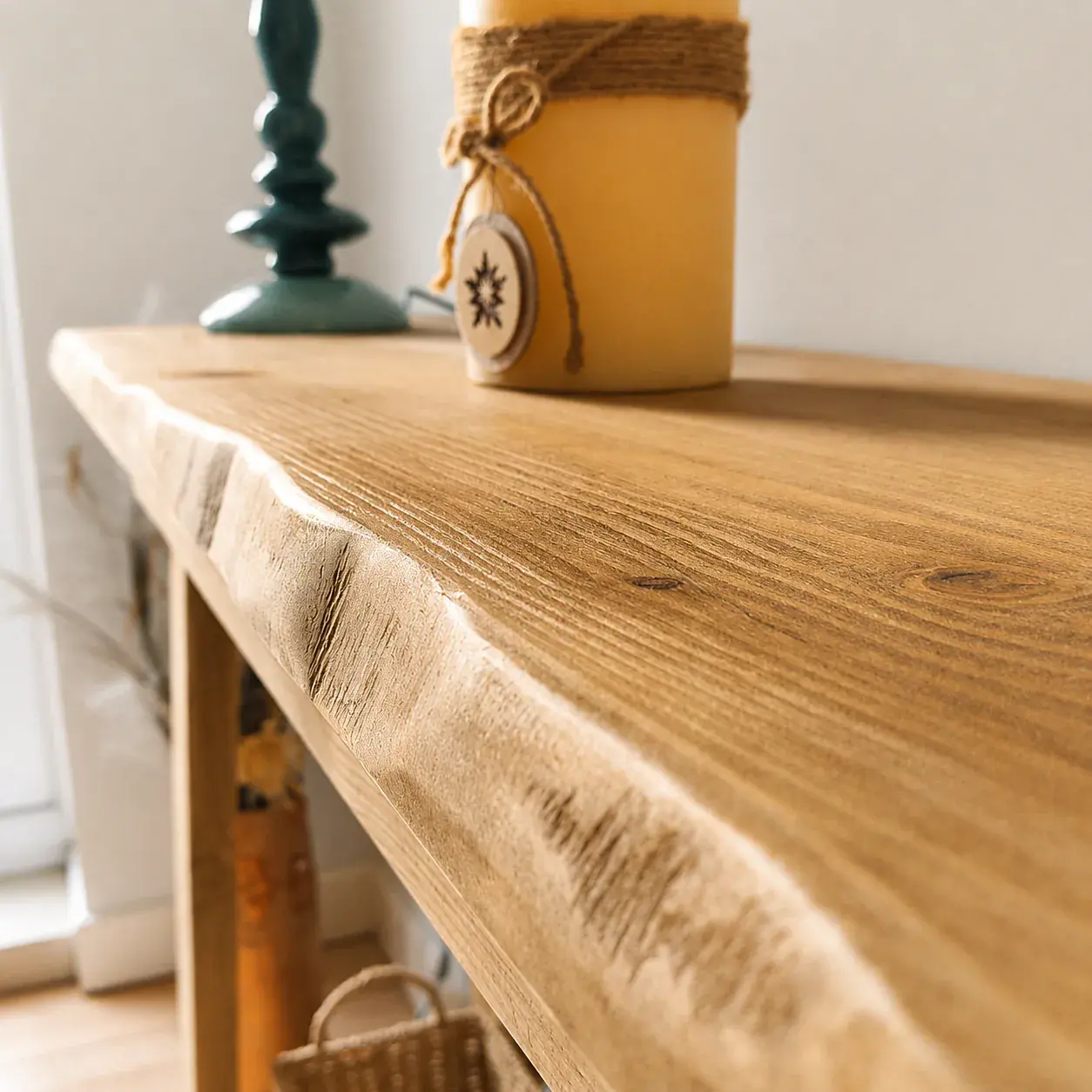
A console table usually looks simple, but its dimensions decide whether it feels useful, balanced and easy to live with. Length, depth and height all matter. The right choice depends on the wall, the walking route, nearby furniture and what the table needs to hold.
Quick answer
As a practical starting point, choose the length from the wall or sofa it sits beside, choose the depth from the available clearance, and choose the height from the surrounding furniture or wall features. Many console tables sit around 80 cm high; narrow designs commonly use about 25–30 cm depth; useful lengths include 80, 100, 120 and 140 cm. A narrow hallway usually needs depth first. A living room wall often needs length and visual proportion first.
How long should a console table be?
Start with the usable wall length, not the total wall length. Leave room for doors, switches, radiators, skirting boards and the way people naturally move through the space. A compact entrance may only need an 80 cm table, while a wider hallway or living-room wall can often take 100, 120 or 140 cm more comfortably.
Several Wood and Loom console designs are made with selectable lengths such as 80, 100, 120 and 140 cm. The narrow hallway console also offers intermediate lengths from 80 to 140 cm, which can help when the available wall is awkward rather than perfectly standard.
How deep should a console table be?
Depth is usually the most important dimension in a narrow space. A table can be the right length and still feel wrong if it projects too far into the route. Before choosing, mark the proposed depth on the floor with tape and walk past it as you normally would, including bags, coats or an opening door.
For especially tight hallway layouts, the 25 cm deep narrow console table is a useful reference point because it gives a small top and lower shelf without claiming too much floor depth. Other current console designs use around 30 cm depth, which can feel more generous while still remaining slim compared with deeper furniture.
What is a good console table height?
Height should relate to what is around the table. Around 80 cm is a common height for many console tables and works well as a standing surface for keys, lamps or display pieces. Some designs are lower, including a 65 cm high low-profile console, where the goal is a quieter, less dominant line against the wall.
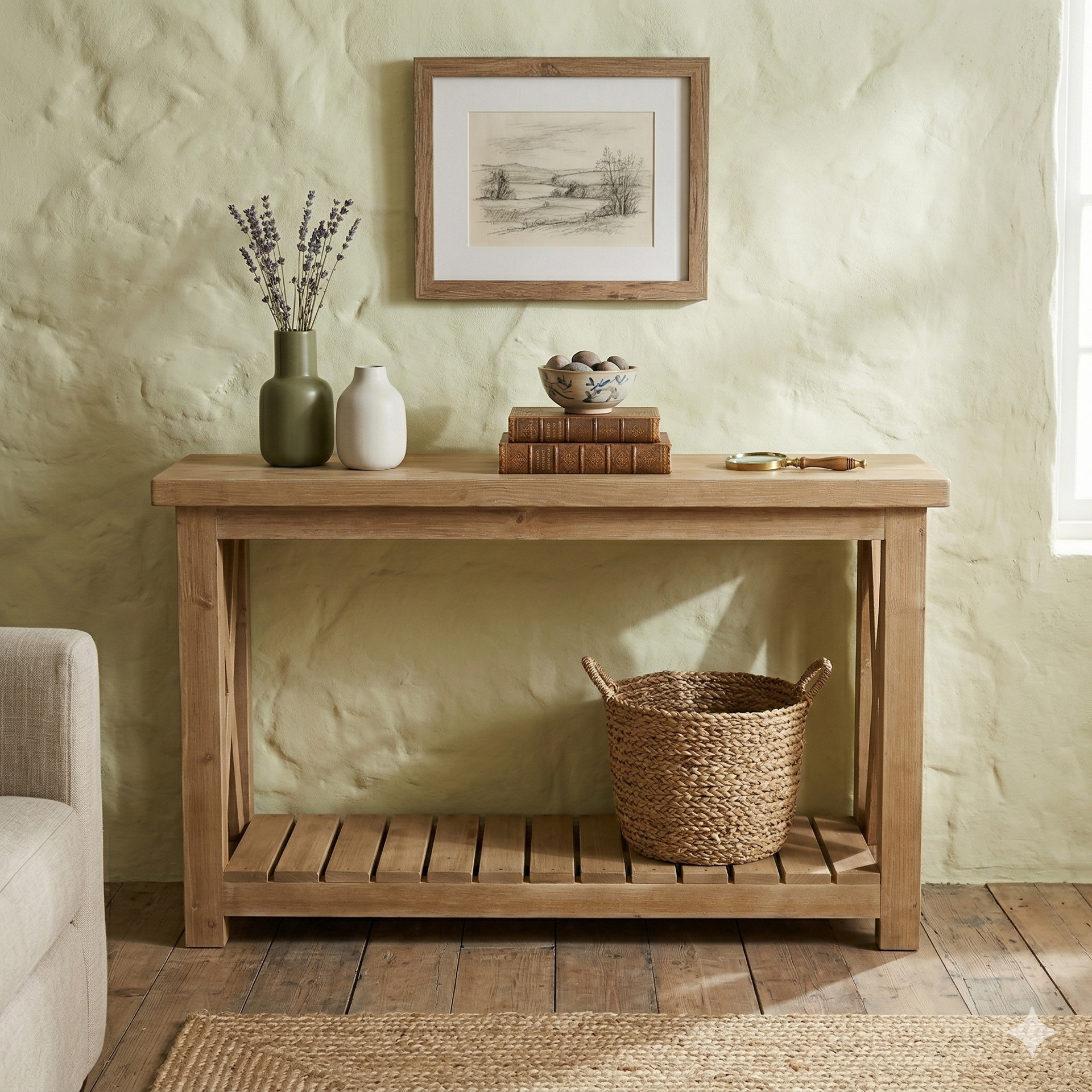
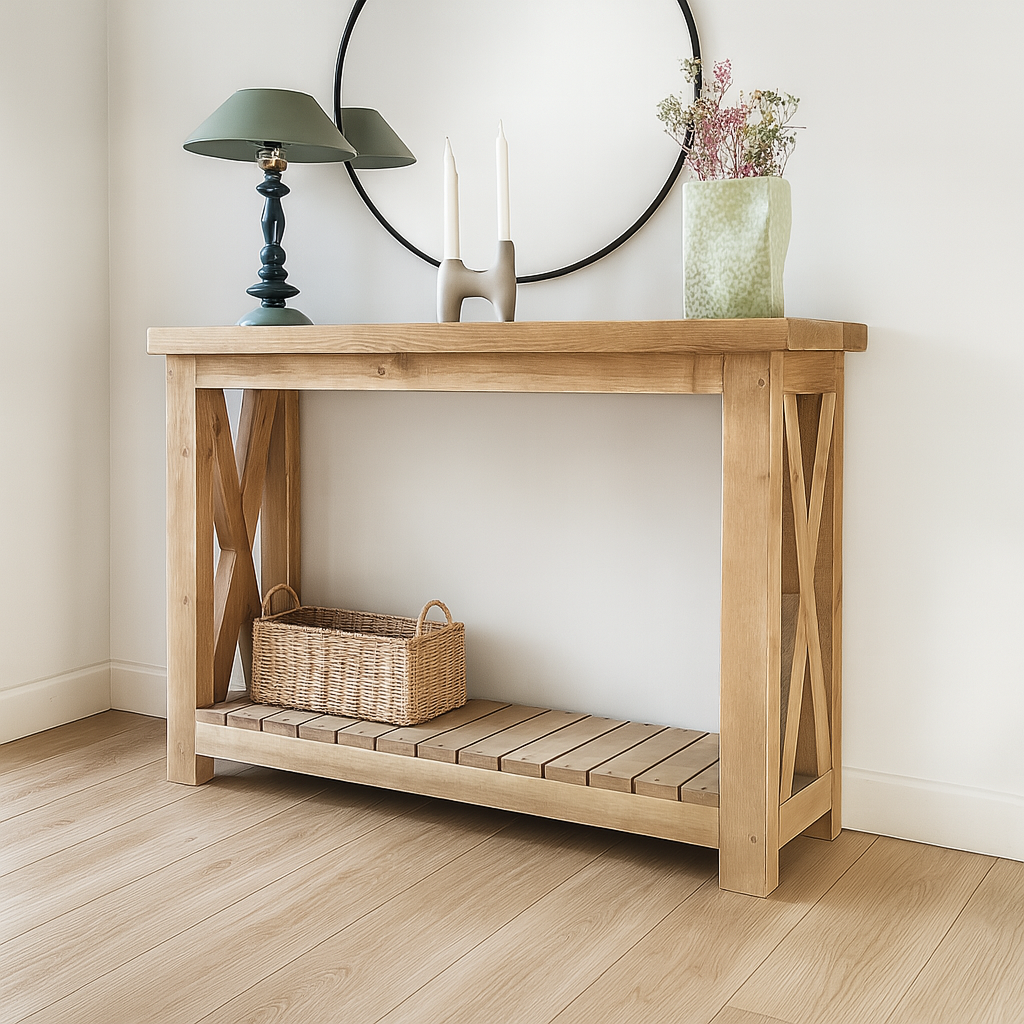
If a mirror, framed picture or window sits above the table, check the gap between the tabletop and the lower edge of that feature. The table should feel connected to the wall composition rather than squeezed beneath it or floating too low.
Hallway considerations
In a hallway, the best console table is the one that adds function without making the route feel narrower. Measure the wall, then measure the route people actually use. Skirting boards, radiators and door swings can all reduce the practical space. For narrow halls, choose depth before style.
Behind-sofa considerations
Behind a sofa, height and length become more important. The table should relate to the sofa back and should not look like a small object lost behind a large piece of seating. Depth still matters, especially if there is a walkway behind the sofa, but the sofa itself gives the main visual reference.
A simple measuring method
- Measure the usable wall or sofa length.
- Mark the proposed depth on the floor with tape.
- Check door swings, radiators, switches and skirting boards.
- Decide what the table must hold: keys, lamp, baskets, shoes, books or display pieces.
- Check the height against nearby furniture, mirrors, pictures and windows.
- Send measurements and a photo if the space needs a custom size.
When custom sizing is useful
Custom sizing is useful when a standard length leaves an awkward gap, when the hallway needs a very specific depth, or when the piece must line up with existing furniture. The goal is not to make the largest possible table. It is to make the table feel like it belongs in that exact space.
Good console table dimensions are not only about size. They are about clearance, proportion and how the furniture will be used every day.