Rustic Wood Character: Live Edge, Tool Marks and Natural Beauty
Discover why live-edge movement, visible tool marks and natural variation give handcrafted solid wood furniture its distinctive rustic character.
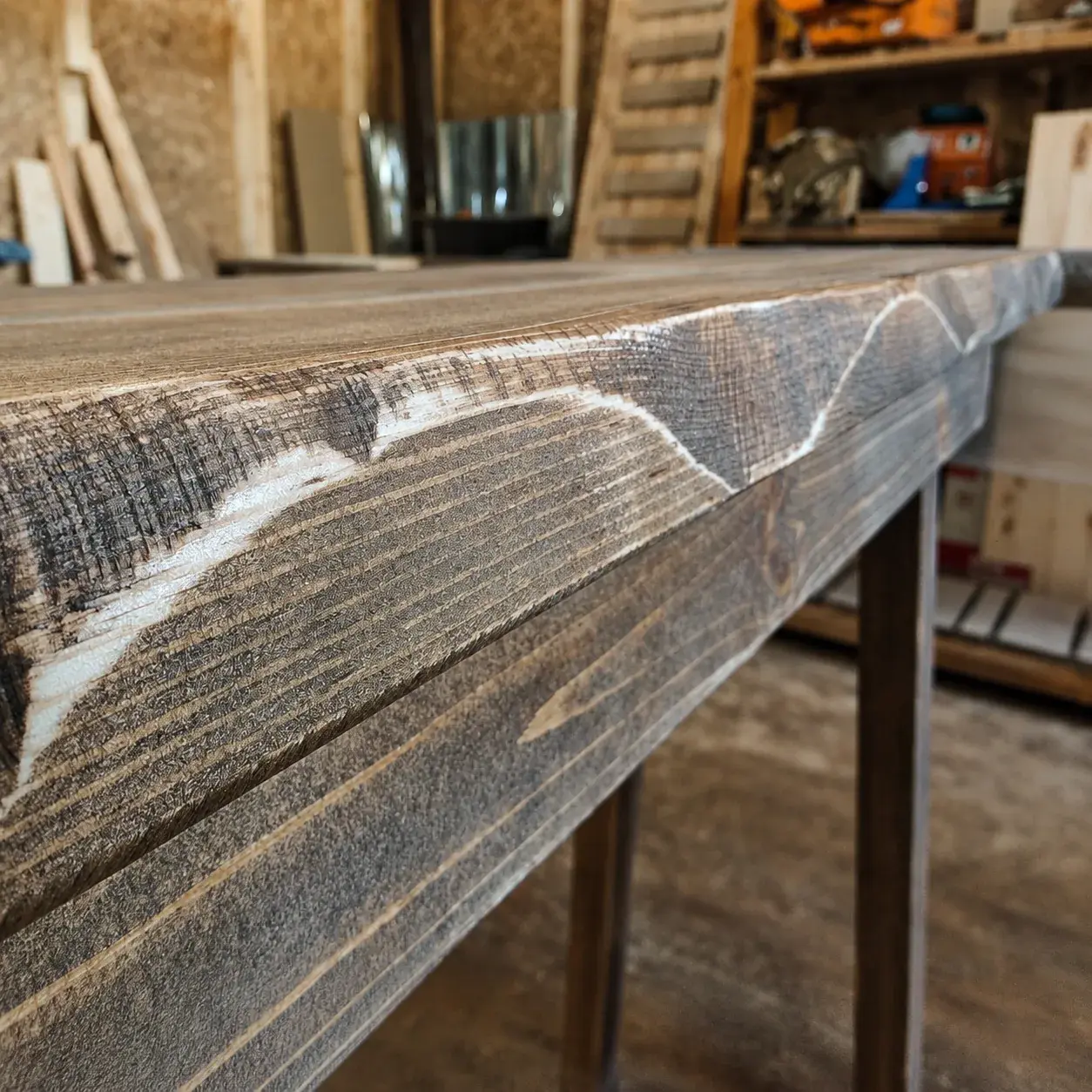
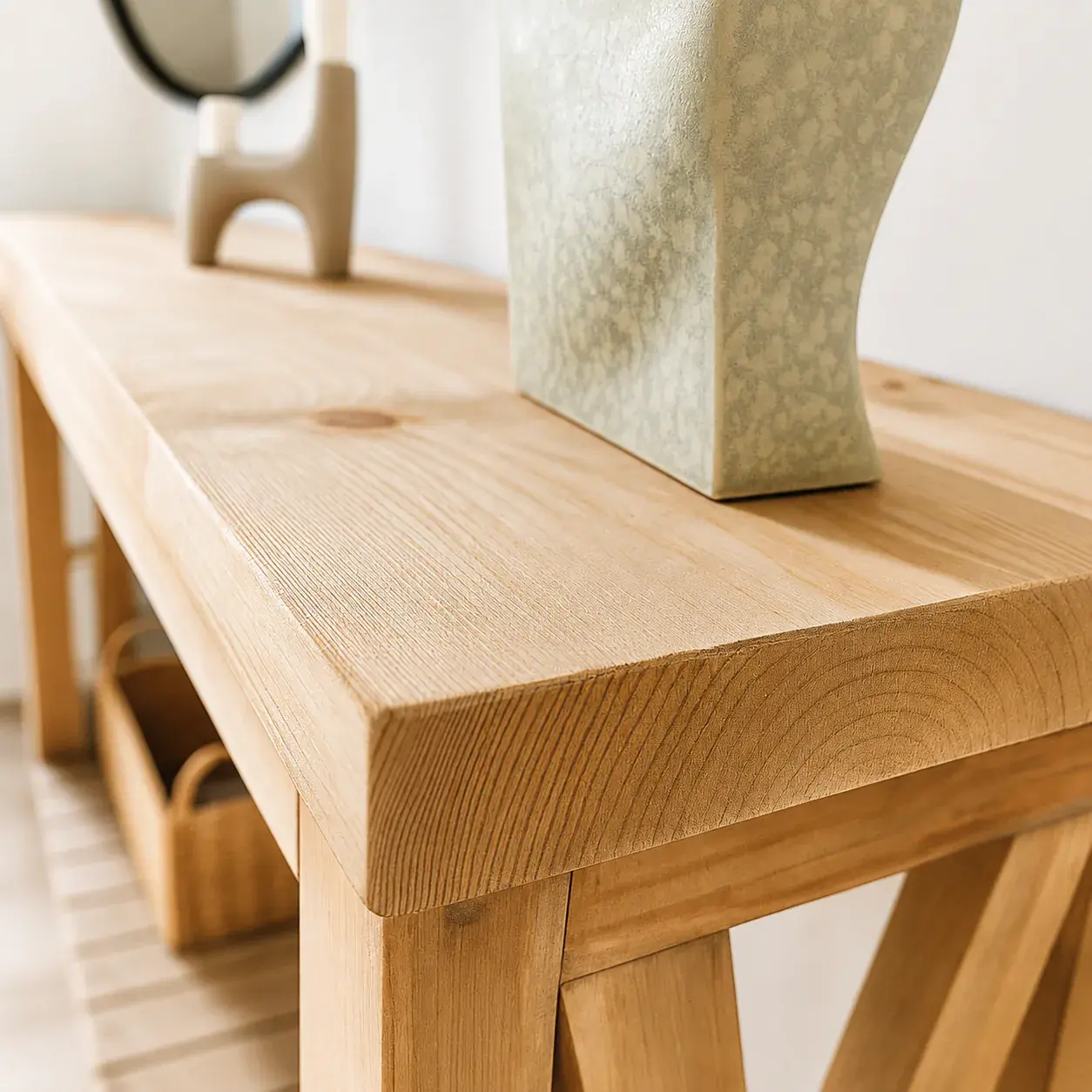
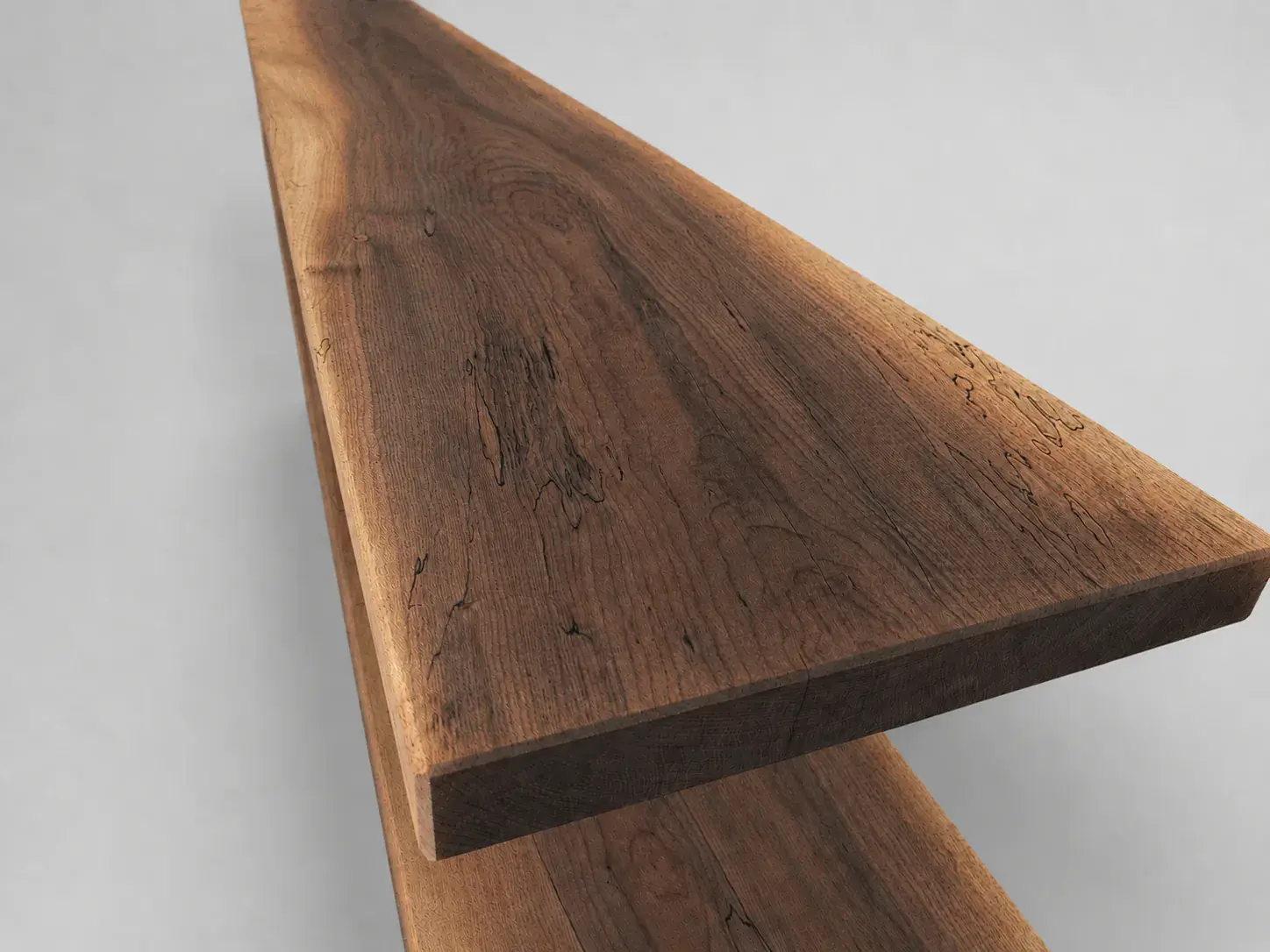
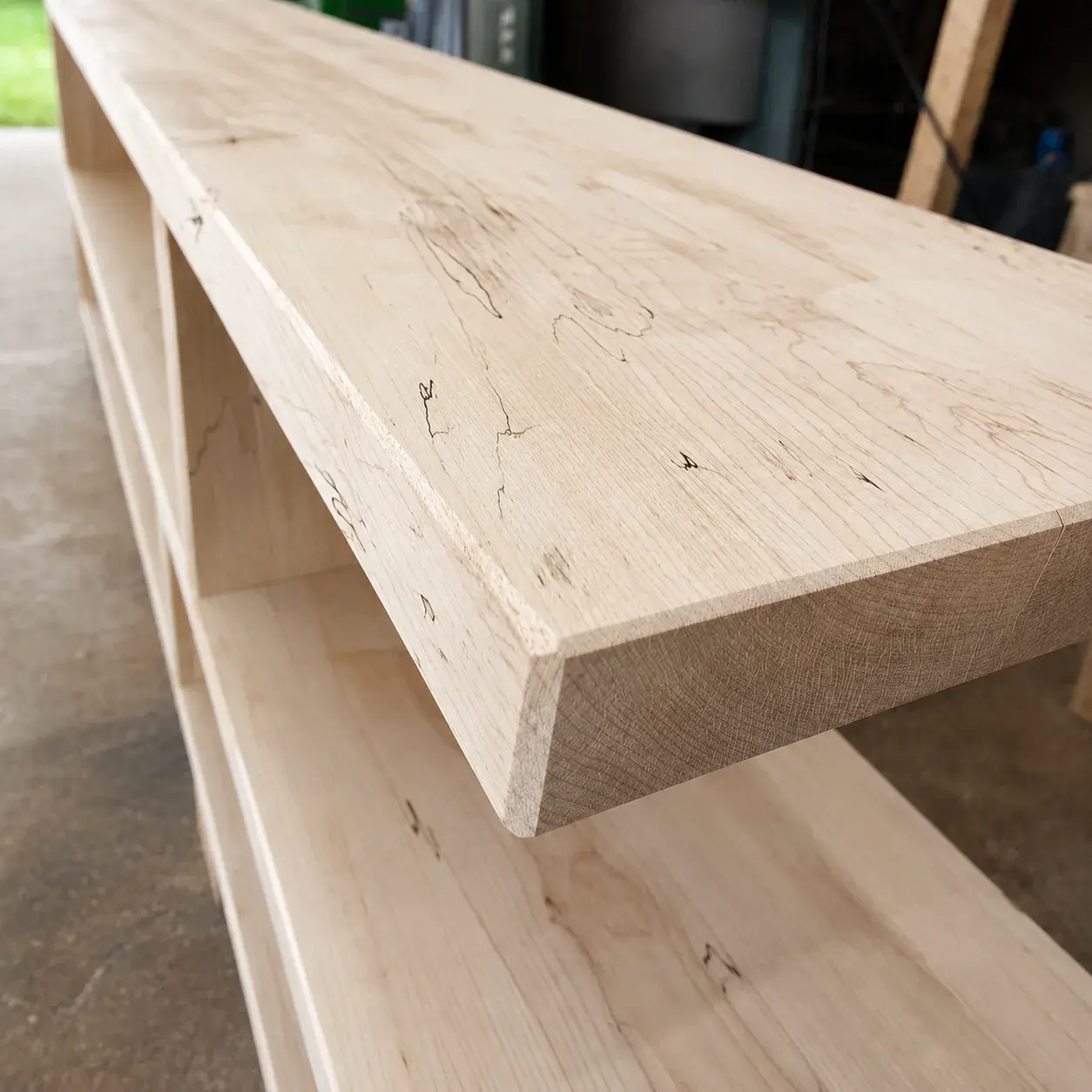
Rustic furniture is often described as simple, warm and full of character. But what does that character actually look like? In these two workshop photographs, the answer is found in the timber itself: a naturally uneven edge, visible tool marks, changing grain and a surface that feels shaped rather than manufactured.
The beauty of a natural, live-edge direction
The edge shown here follows the natural movement of the board instead of being reduced to a perfectly uniform factory line. This live-edge direction gives the piece a softer, more organic silhouette and allows the grain to remain part of the design. Every board is different, so the final outline will always have its own rhythm and detail.
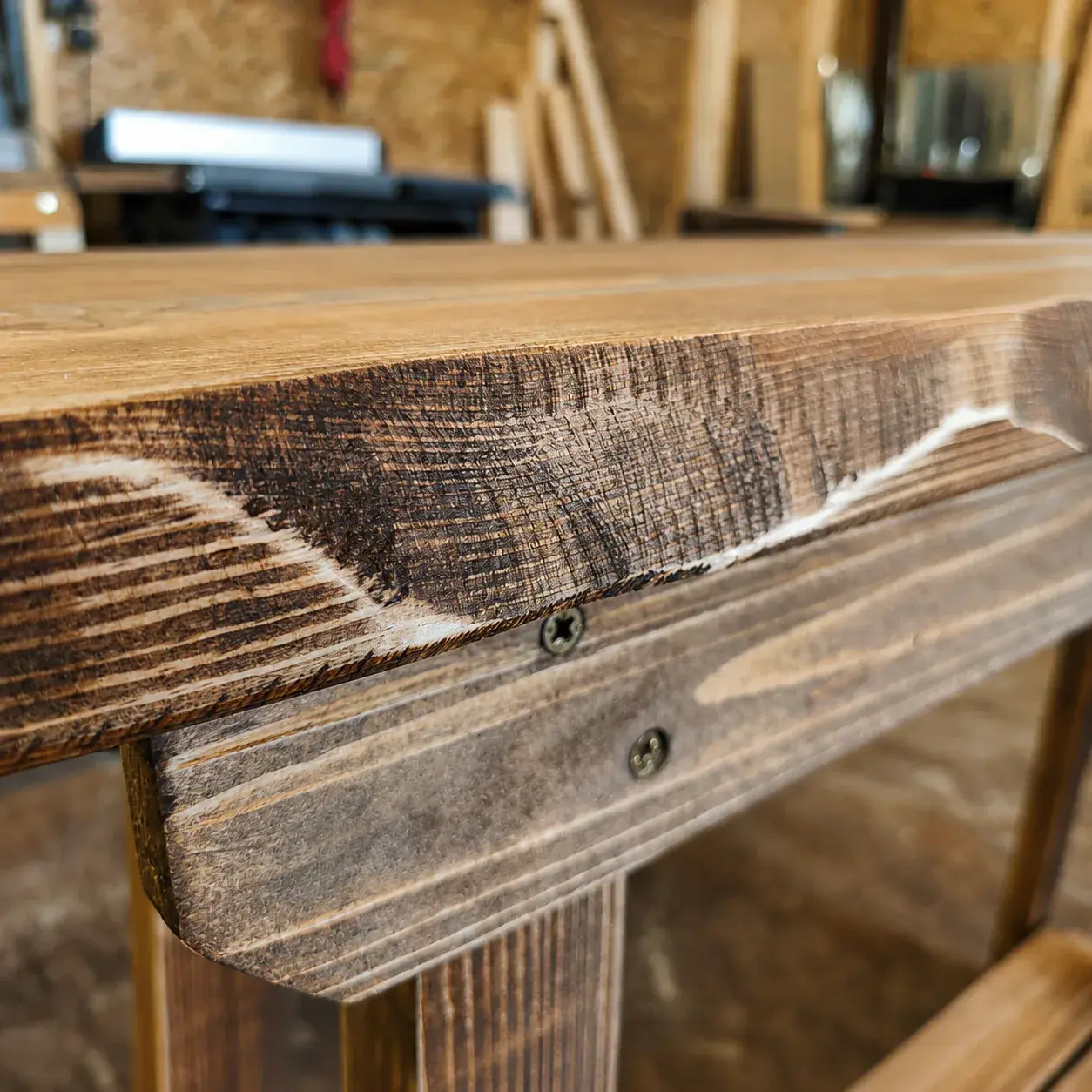
Tool marks are part of the making
The cross-grain texture visible along the edge is a reminder that the material has been worked by hand and finished with intention. These marks are not random damage. They are part of the rustic surface language we value: tactile, honest and connected to the workbench rather than a perfectly repeated industrial mould.
Rustic does not mean unfinished. It means the natural material and the work that shaped it are allowed to remain visible.
Rustic character versus manufactured uniformity
Modern manufactured surfaces can offer consistent colour, smooth repetition and predictable edges. Those qualities are useful in many interiors. Solid timber offers something different: depth, variation and a sense that the piece belongs to a real material with its own history. Knots, grain changes, small tonal shifts and an irregular edge make each handmade piece individual.
- Natural grain and edge movement create a one-of-a-kind appearance.
- Visible tool marks add tactile depth and reinforce the handmade character.
- Solid wood can be designed for everyday use while retaining an honest, rustic surface.
- Small variations are part of the material and should be expected from a handmade piece.
Designed to be lived with
For Wood & Loom, the aim is to balance this natural character with practical construction, stability and a finish suited to everyday life. The exact amount of variation depends on the timber, the design and the finish selected. If you prefer a calmer or more uniform appearance, we can discuss the direction of the grain, the edge treatment and the finish before making your piece.
These photographs show the kind of detail that can disappear in a polished product image, but it is often what makes solid wood furniture feel warm and authentic in a home. A rustic piece is not trying to imitate nature. It is giving the material room to speak for itself.