Made-to-Order vs Mass-Produced Furniture: Which Is Right for Your Home?
Made-to-order and mass-produced furniture solve different needs. Compare fit, materials, lead time, cost and character before deciding what belongs in your home.
Furniture is often compared by appearance and price, but the way a piece is made changes how well it can fit a room, how soon it arrives and how much choice you have over its materials. Mass-produced furniture and made-to-order furniture can both be sensible purchases. The better option depends on the space, the purpose and what you expect from the piece over time.
What mass-produced furniture does well
Mass production is designed around consistency and availability. A standard design can be manufactured repeatedly, packed efficiently and held in stock. This is useful when you need furniture quickly, have a fixed budget or want several matching items without natural variation becoming part of the decision.
- Usually available in standard sizes with predictable specifications.
- Often ready for dispatch sooner than a piece made after ordering.
- Can be a practical choice for temporary homes or lightly used rooms.
- Makes it easier to buy several identical pieces from the same range.
What made-to-order changes
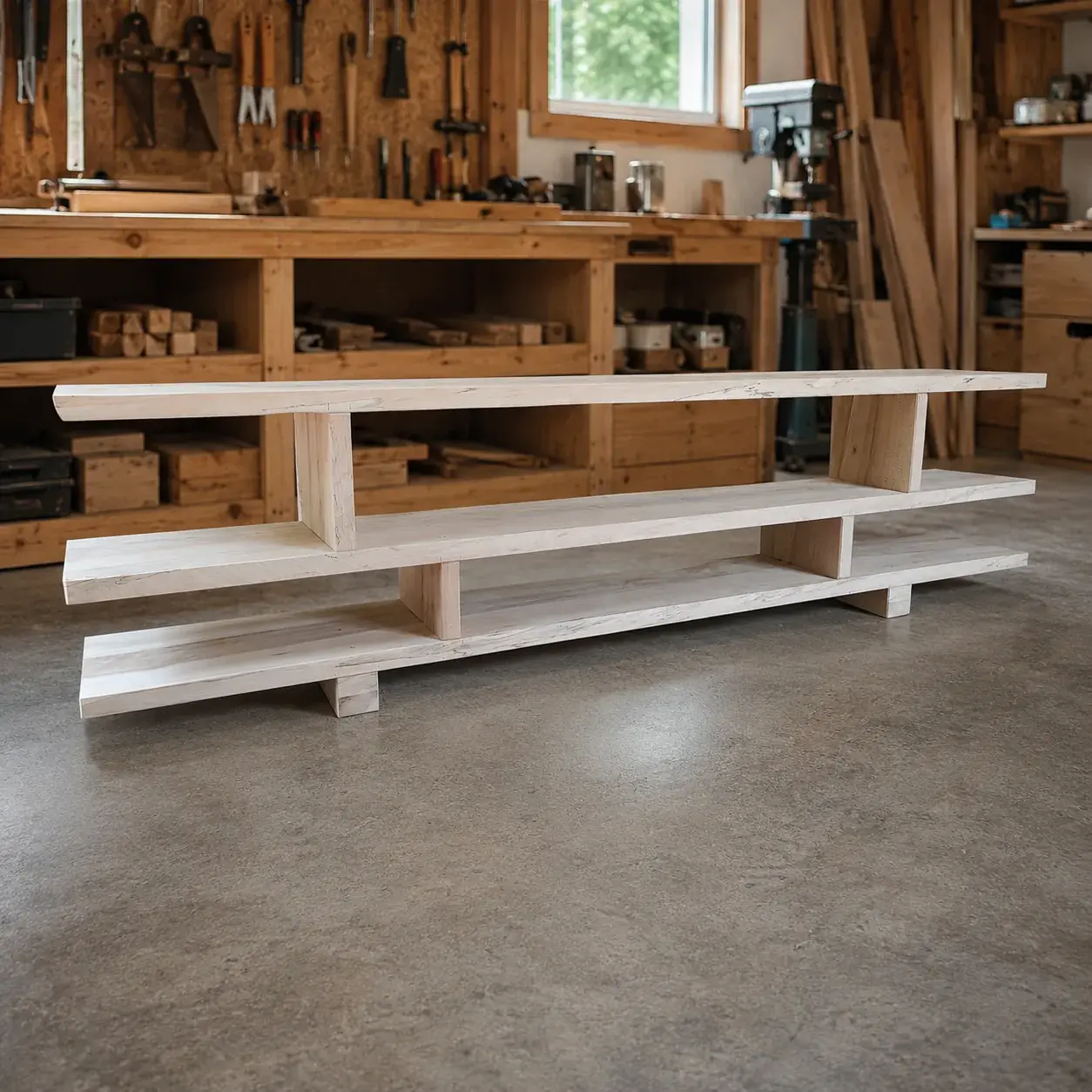
A made-to-order piece begins with a design but is prepared after the customer chooses the relevant size, timber or finish. This allows the furniture to respond more closely to a particular wall, hallway or media setup. It also means the customer should expect a production lead time rather than immediate dispatch.
Fit and proportion
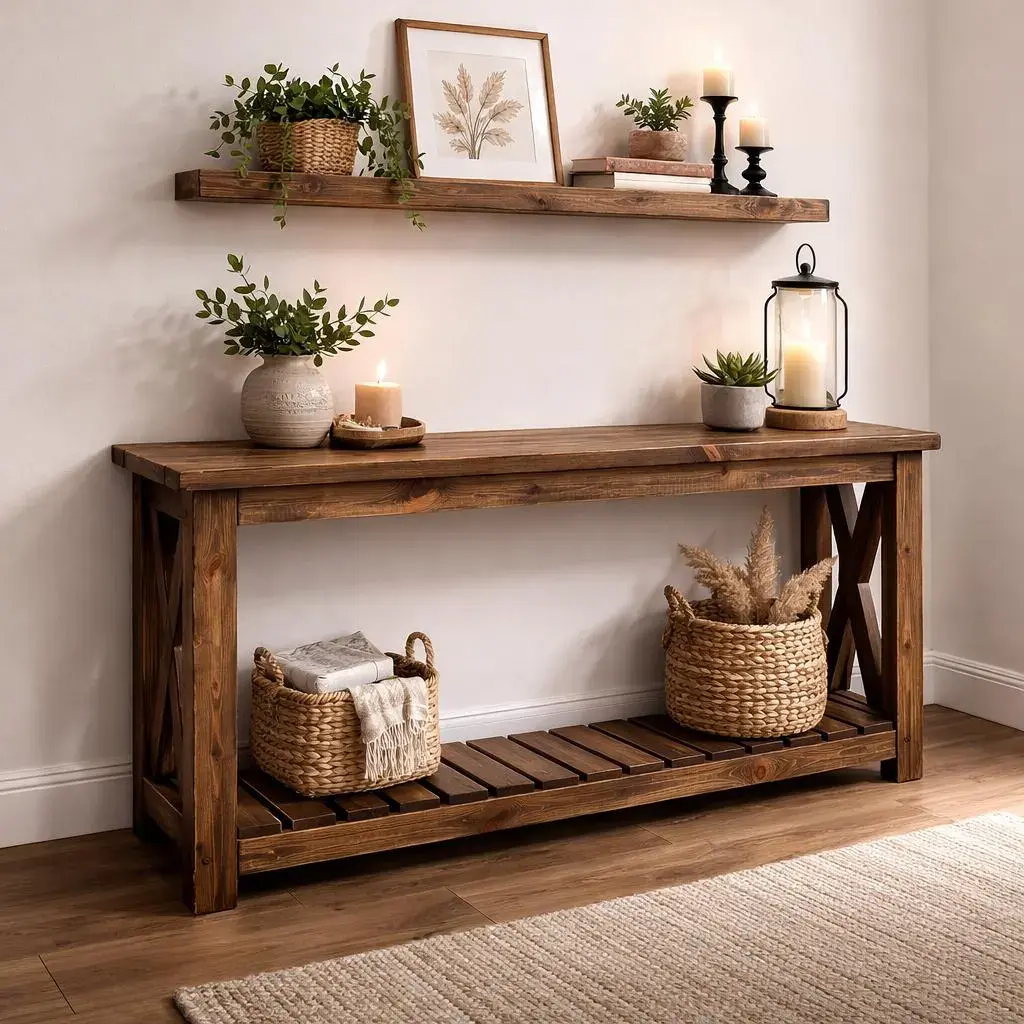
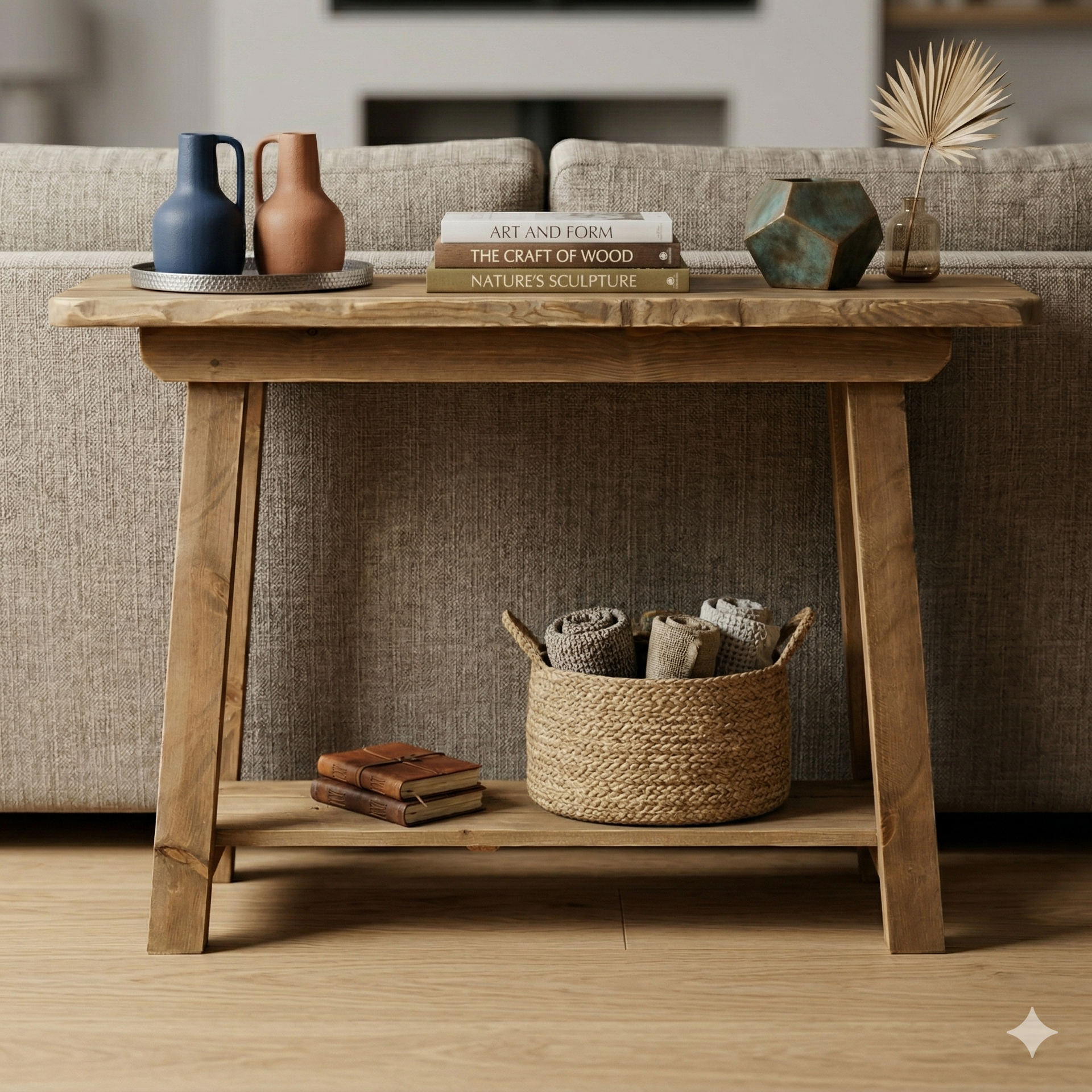
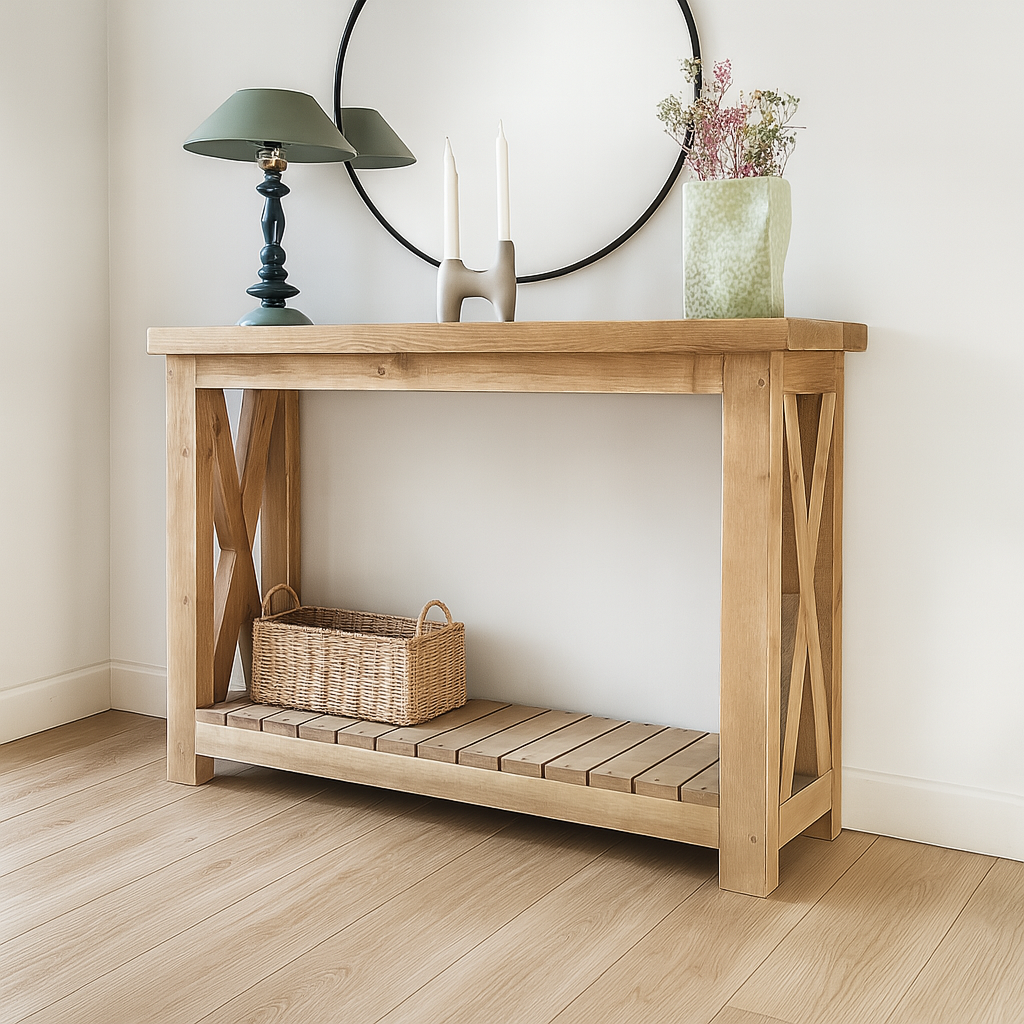
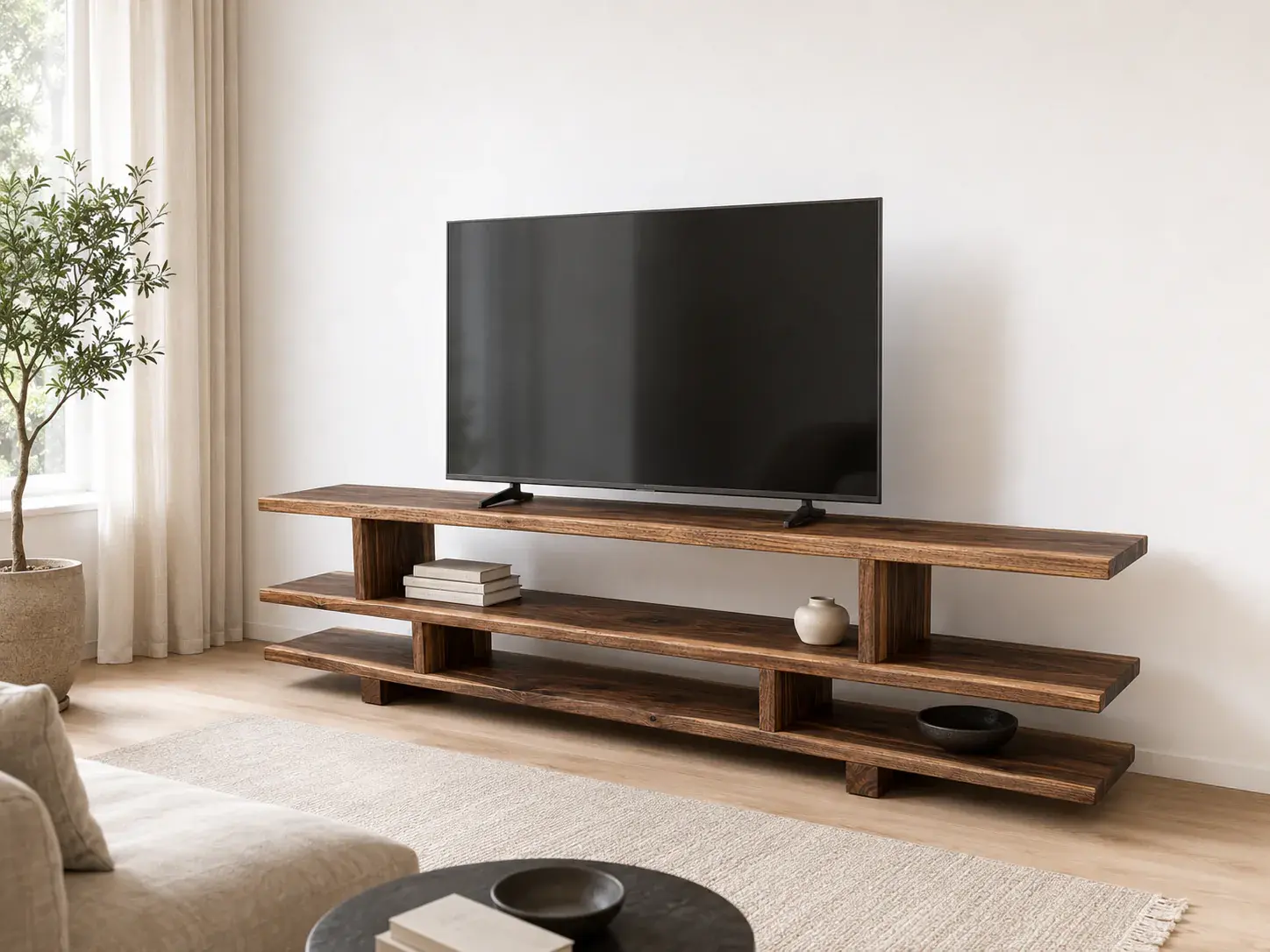
Standard furniture works well when the room already suits standard dimensions. Awkward spaces make the difference clearer. A narrow hallway may need a console only 25 cm deep, a long wall may need a wider media unit, and a sofa table must relate to the exact height and length of the seating. Custom sizing can use the available space without forcing the room to adapt to the furniture.
Materials and natural variation
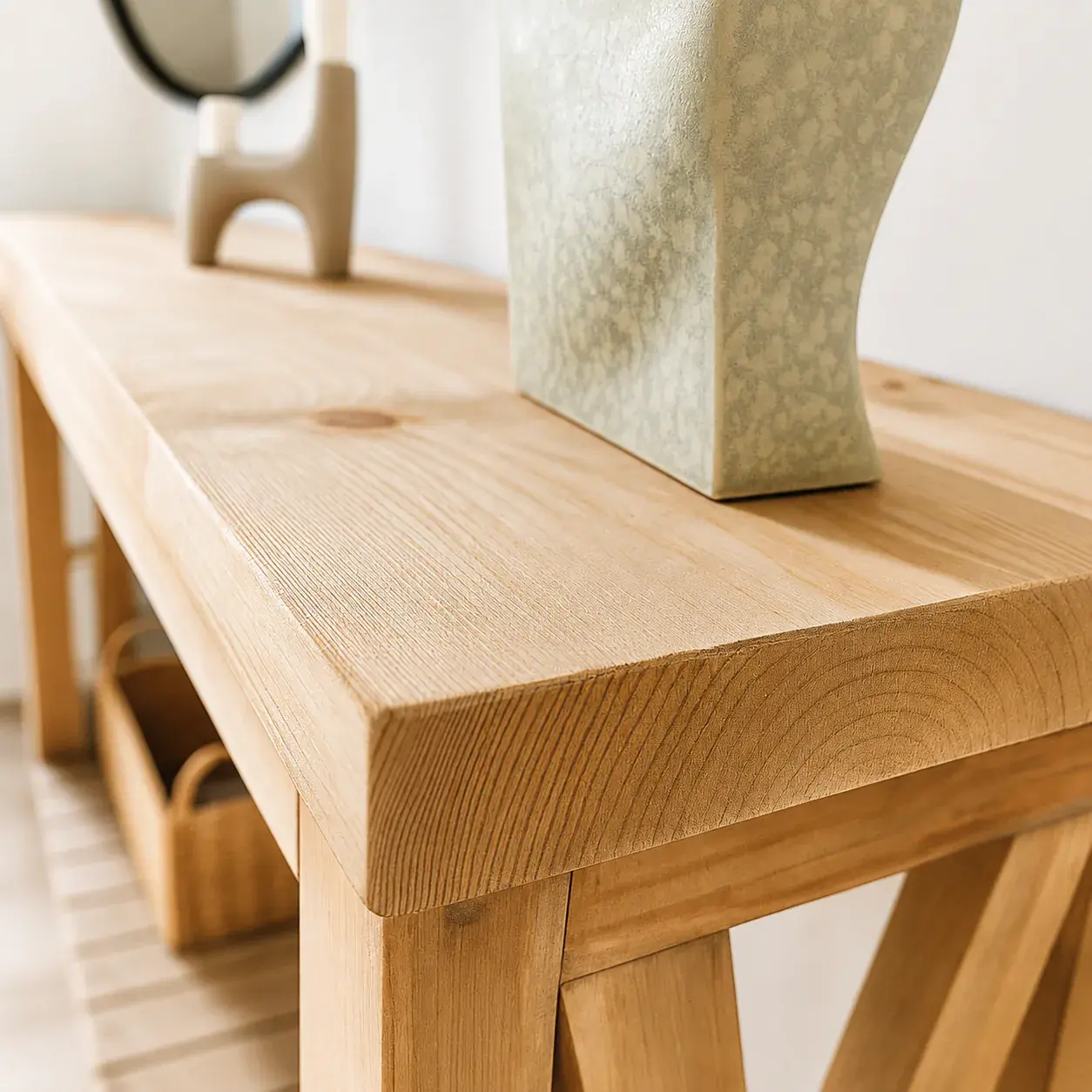
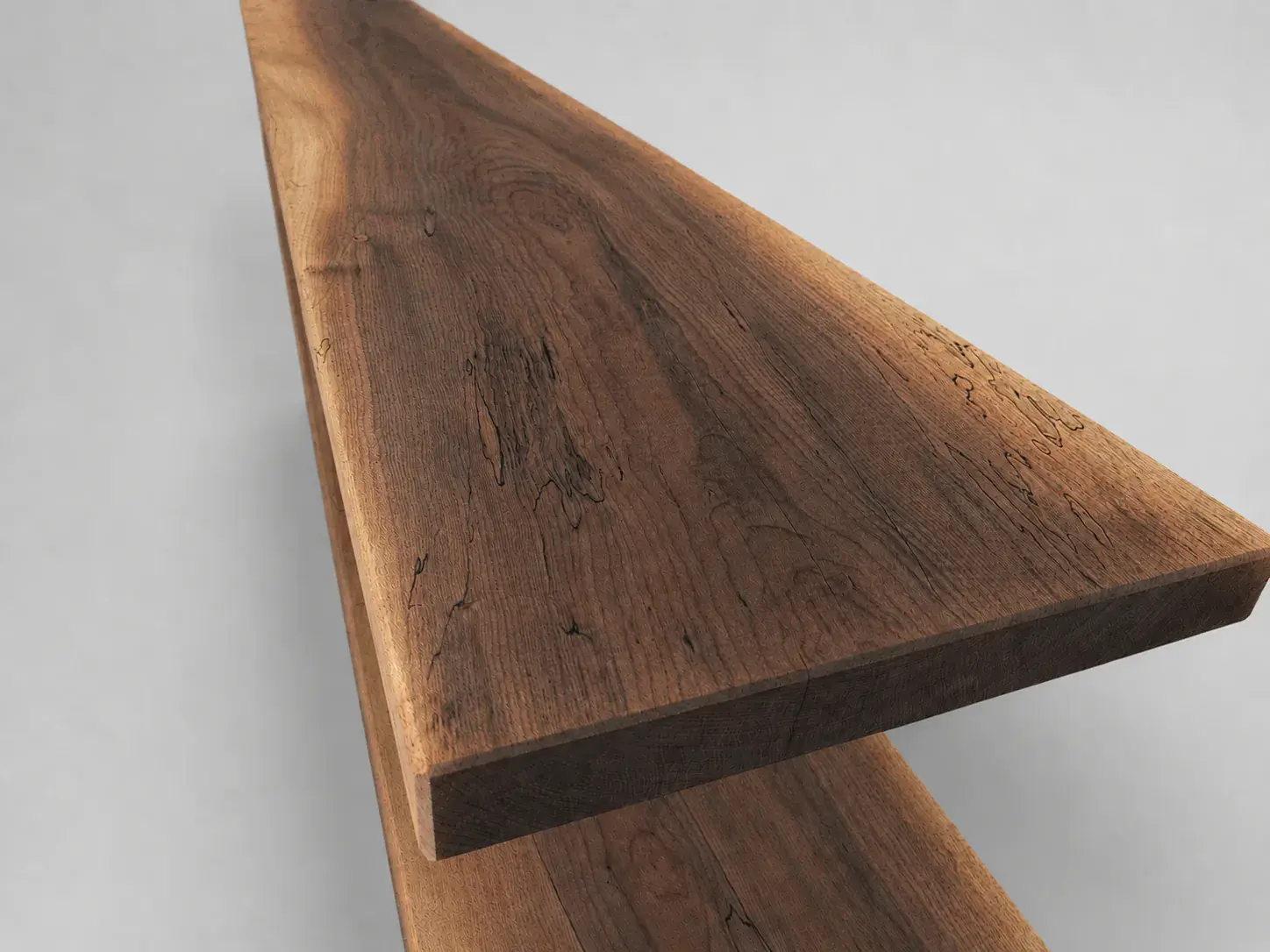
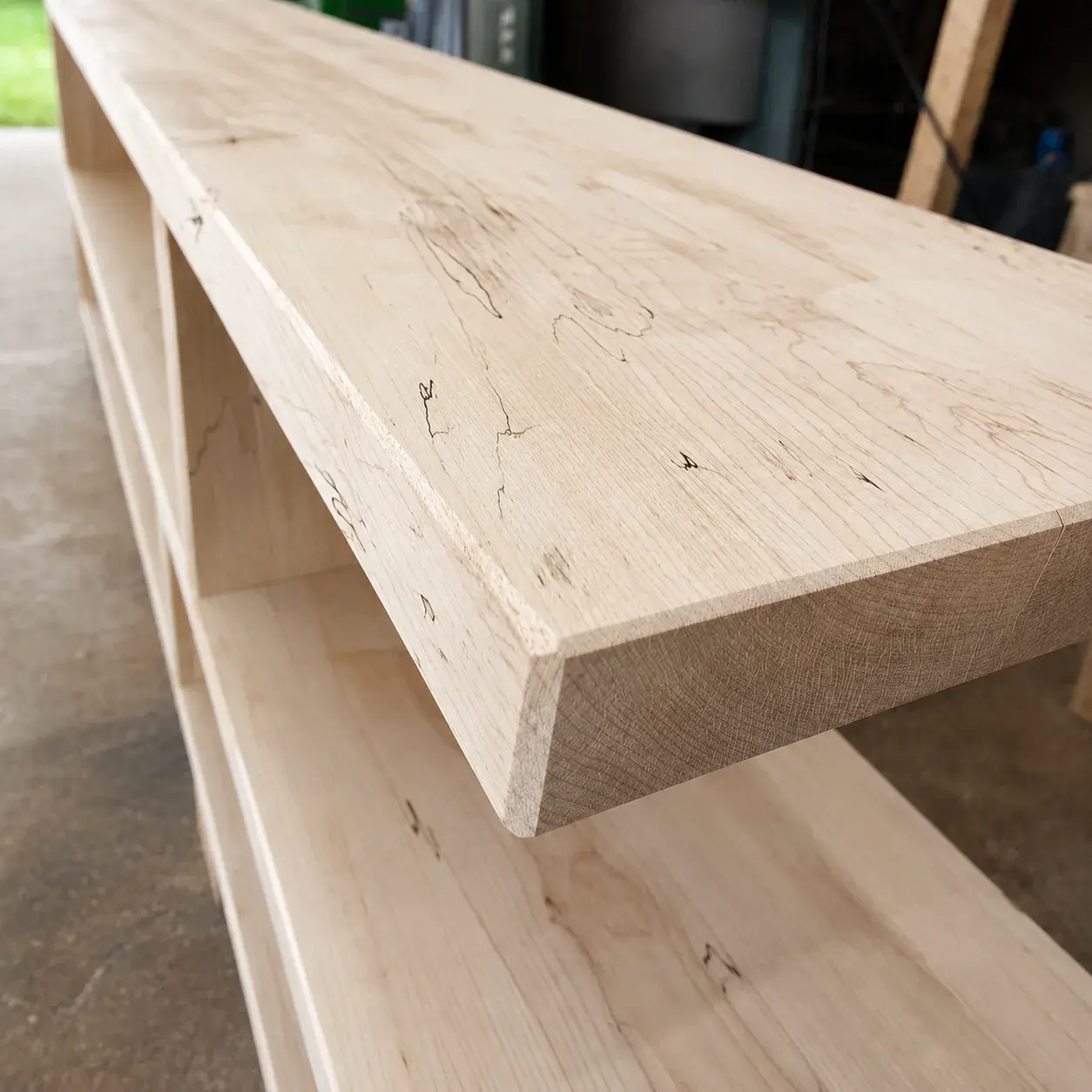
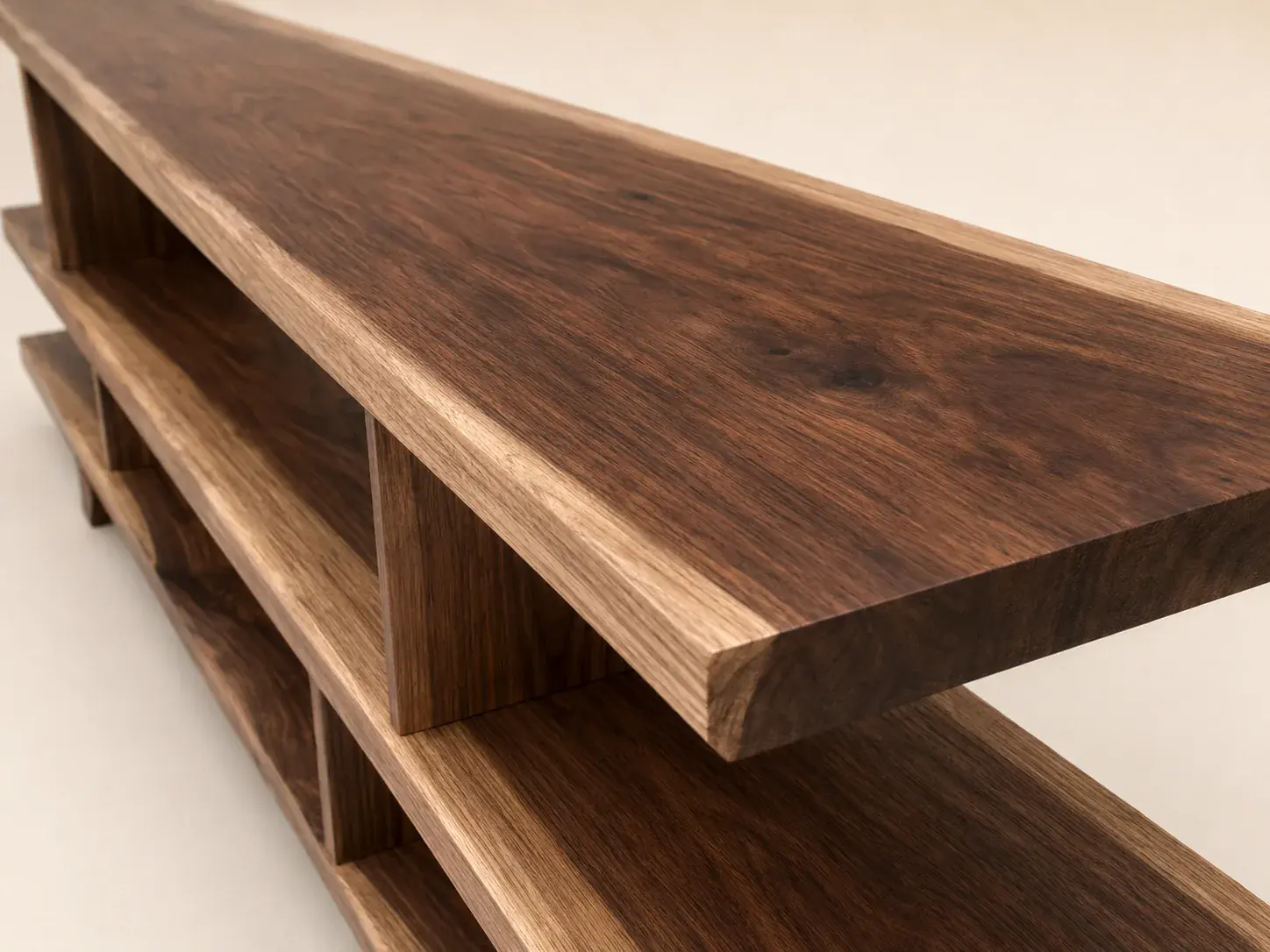
Many mass-produced surfaces are engineered to look highly consistent. Solid wood behaves differently: grain, knots and colour movement vary from board to board. Made-to-order solid wood furniture makes this natural variation visible rather than trying to produce identical copies. That character is an advantage when you value real timber, but it is worth understanding that the finished piece will not be visually uniform like a printed surface.
Lead time and communication
Furniture made after ordering takes time for material preparation, construction, finishing and packing. Clear communication matters: dimensions, finish, destination and any special requirements should be agreed before work begins. If you need a piece for a fixed date, ask whether the expected production and delivery schedule is realistic before placing the order.
Price and long-term value
Mass-produced furniture often has the lower initial price because design, tooling and production are spread across many units. Made-to-order furniture includes more individual handling and may use larger sections of real timber. The useful comparison is not only the purchase price, but whether the dimensions, construction and material suit the intended use well enough for the piece to remain useful.
The best value comes from furniture that fits the room, performs its job and continues to feel worth keeping.
When to choose each option
- Choose mass-produced furniture when speed, a low initial cost and identical repeat pieces are the priorities.
- Choose made-to-order furniture when standard dimensions waste space or interrupt movement.
- Choose solid wood when visible grain, natural character and the feel of real timber matter.
- Ask about custom work when you have an unusual wall, a very long span or a specific functional requirement.
Questions to answer before ordering
- What exact width, depth and height can the room accept?
- How soon do you genuinely need the furniture?
- Do you prefer consistent surfaces or visible natural variation?
- Which objects must the piece store or support?
- Is a standard design sufficient, or would a small dimensional change solve the room better?
Neither production model is right for every purchase. The important step is to match the way the furniture is made to the problem it needs to solve. For a straightforward temporary need, a standard item may be enough. For a difficult space or a piece intended to become part of the home for years, made-to-order furniture offers a more considered starting point.