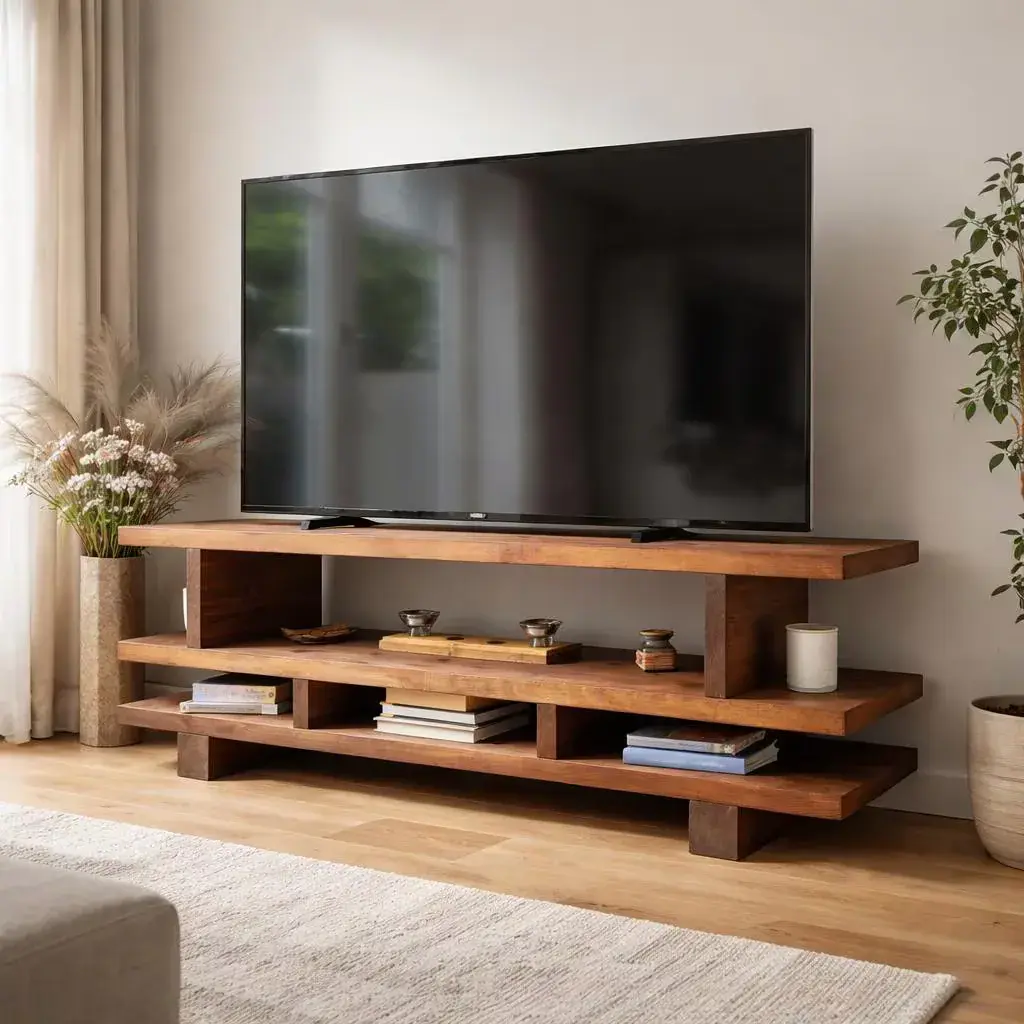
TV Stand Size Guide: Width, Height and Storage
Choose a TV stand that feels balanced with the screen and works with your seating, equipment and wall. Use these practical measurements before ordering.
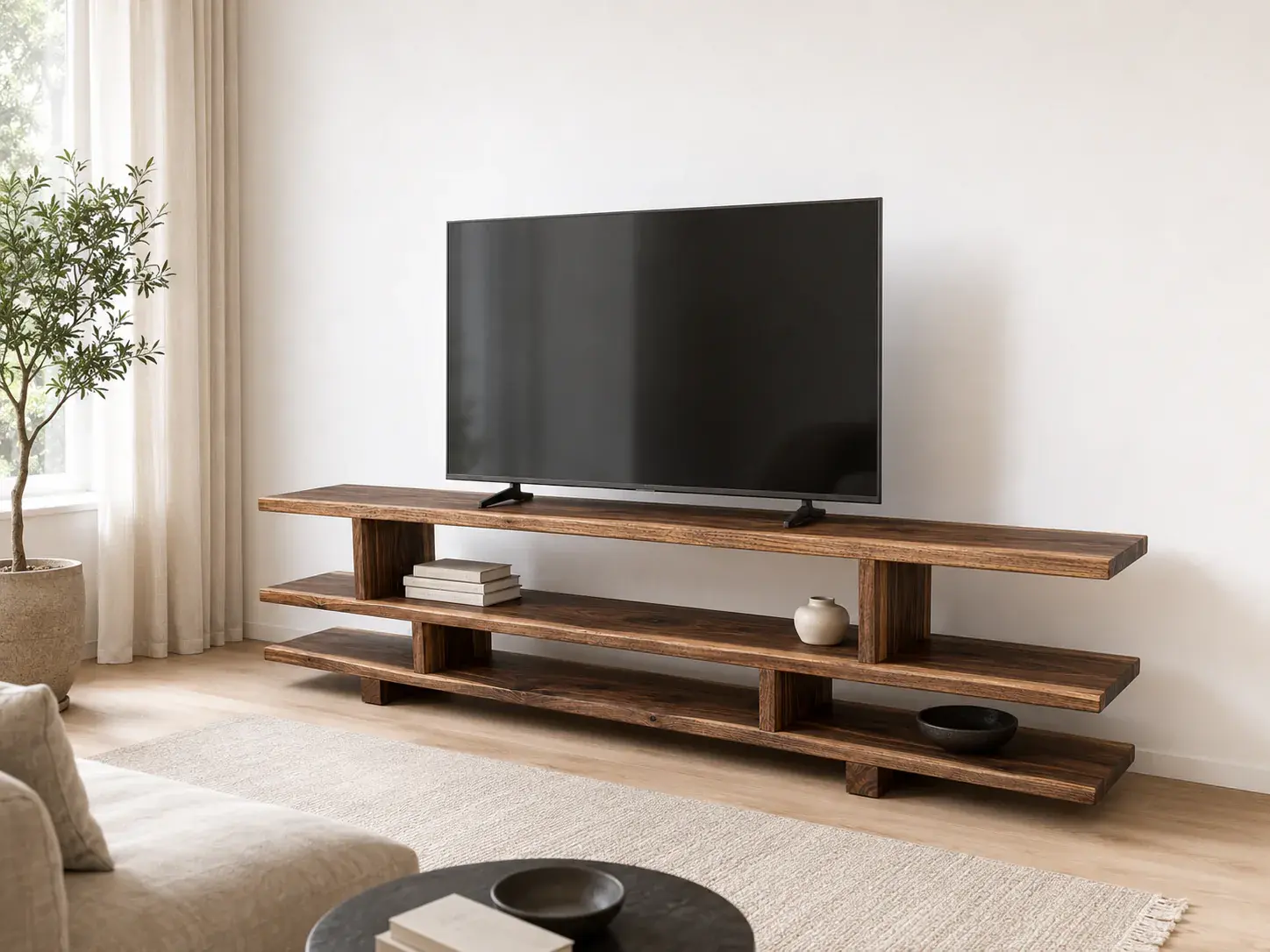
A television is described by its diagonal screen size, but a TV stand must work with the television's actual width, the viewing height and everything stored around it. Choosing by the advertised number alone can leave the stand looking too short, too tall or too crowded. A few direct measurements will produce a much more balanced result.
Measure the television itself
Measure the full width of the television from its left edge to its right edge, including the frame. If the TV will stand on the furniture, also measure the distance between the outer edges of its feet and the total depth of the feet. Centre stands and wide-set feet create very different requirements.
- Record the television's full external width, not only its diagonal size.
- Measure the spacing and depth of the feet if the screen is not wall-mounted.
- Check the manufacturer's stated weight.
- Allow space for cables without pressing the unit against the wall.
How wide should the TV stand be?
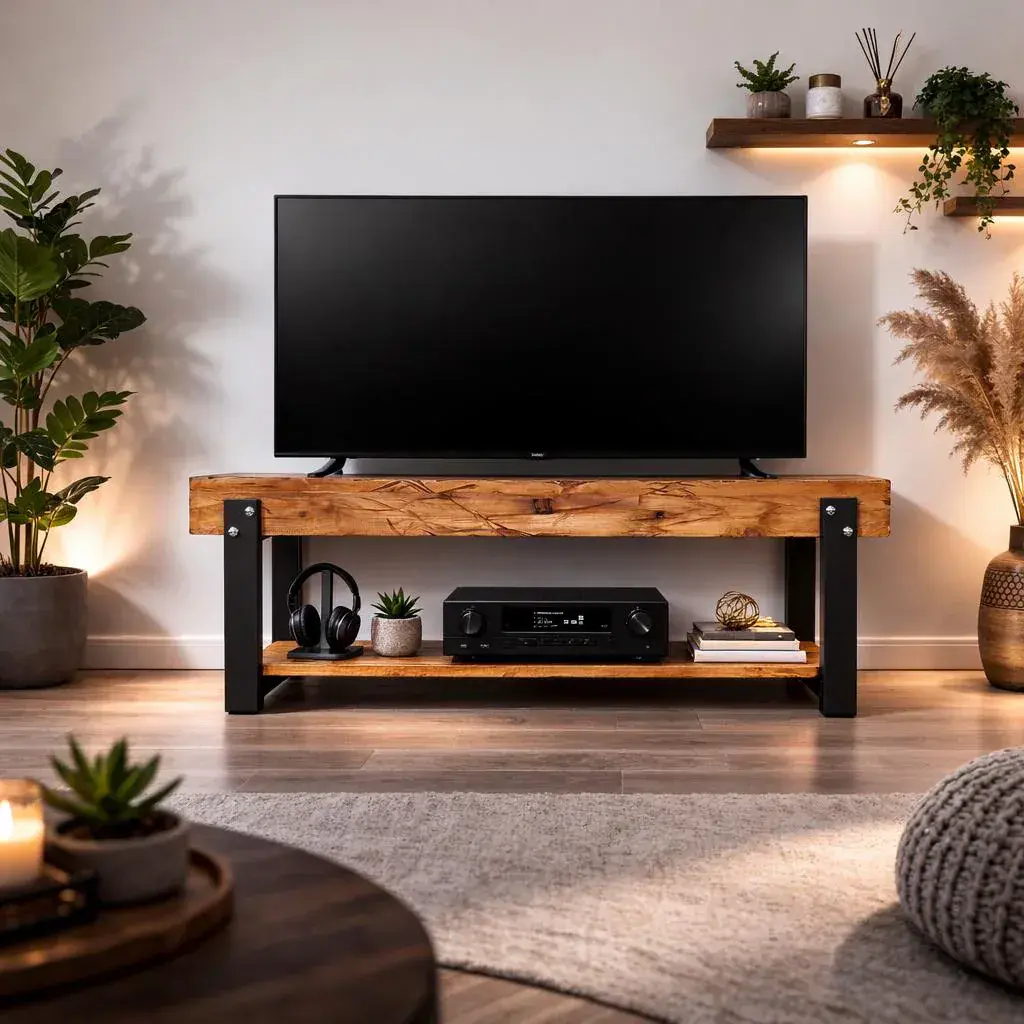
As a visual starting point, the stand should normally be wider than the television. An additional 15 to 30 cm on each side often creates a calmer composition and leaves useful space for a speaker, lamp or small object. Very large rooms or long walls may benefit from a wider unit, while a compact room may need a more restrained margin.
Choose height from the seated viewing position
Sit where the television will normally be watched and look straight ahead. The centre of the screen should be close to a comfortable, natural eye line. The exact height depends on the sofa, viewing distance, screen size and whether the television sits on the unit or is mounted above it. Avoid choosing height from a standing position.
Plan for equipment before deciding shelf spacing
List every device the stand must hold: soundbar, games console, receiver, router, record player or media box. Measure each item, including cable connections and ventilation space. Open shelving keeps equipment accessible, but shelf height and depth must be confirmed before the furniture is made.
Do not overlook depth
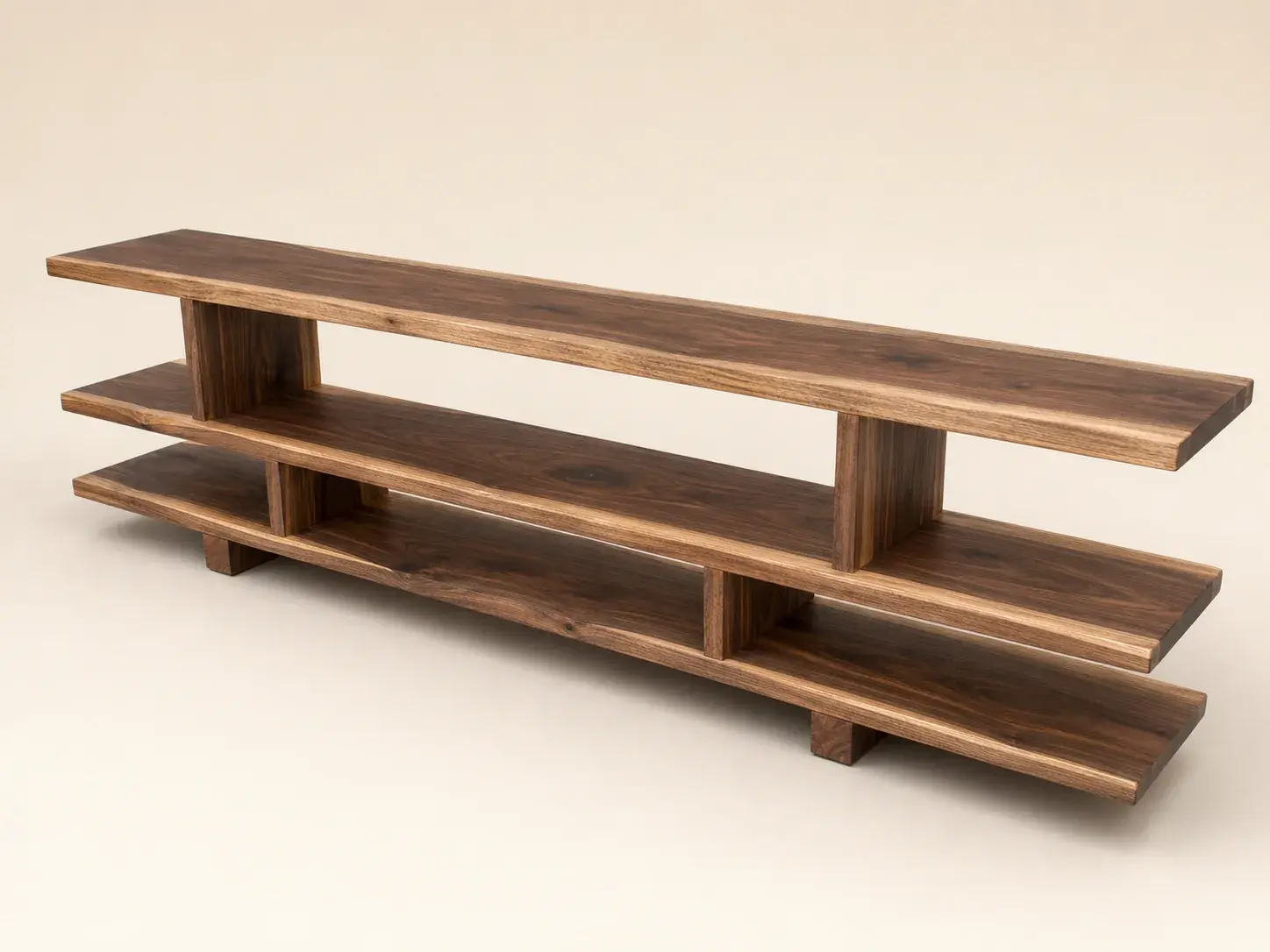
Modern televisions may be slim, but their feet, soundbars and AV equipment can require more depth than expected. Measure the deepest object and add room for plugs and cable bends. If the stand sits in a walking route, mark its proposed depth on the floor with tape before ordering.
Wall-mounted televisions still need proportion
A wall-mounted screen removes the need to support the TV feet, but the furniture below still anchors the composition. Centre the unit with the screen unless the room has an intentional asymmetrical layout. Leave enough vertical space for a soundbar and avoid a large empty gap that makes the two elements feel unrelated.
Account for delivery and assembly
An extra-long solid wood TV stand can be substantial. Measure doors, stairs, corners and lifts as well as the final wall. Ask how the piece is packed and whether any assembly is required. A unit that suits the living room still needs a realistic route into the home.
The right media unit balances the screen, supports the equipment and still belongs to the scale of the room.
When custom sizing is useful
Custom sizing is especially useful for very long televisions, wall-to-wall layouts, unusually low seating or a specific collection of equipment. Share the television model or exact dimensions, wall width, desired storage and photographs of the route into the room. These details help confirm whether the proposed size is practical.
Your measurement checklist
- Measure the full width, depth and foot spacing of the television.
- Record the available wall width and desired margin on each side.
- Check seated eye height and whether the TV is standing or wall-mounted.
- Measure every device that will use the shelves.
- Allow for ventilation, plugs and cable bends.
- Confirm the delivery route before choosing an extra-long unit.
Once these measurements are clear, style and timber become easier choices. The dimensions establish whether the stand will work; the material, finish and edge detail decide how it will feel in the room.